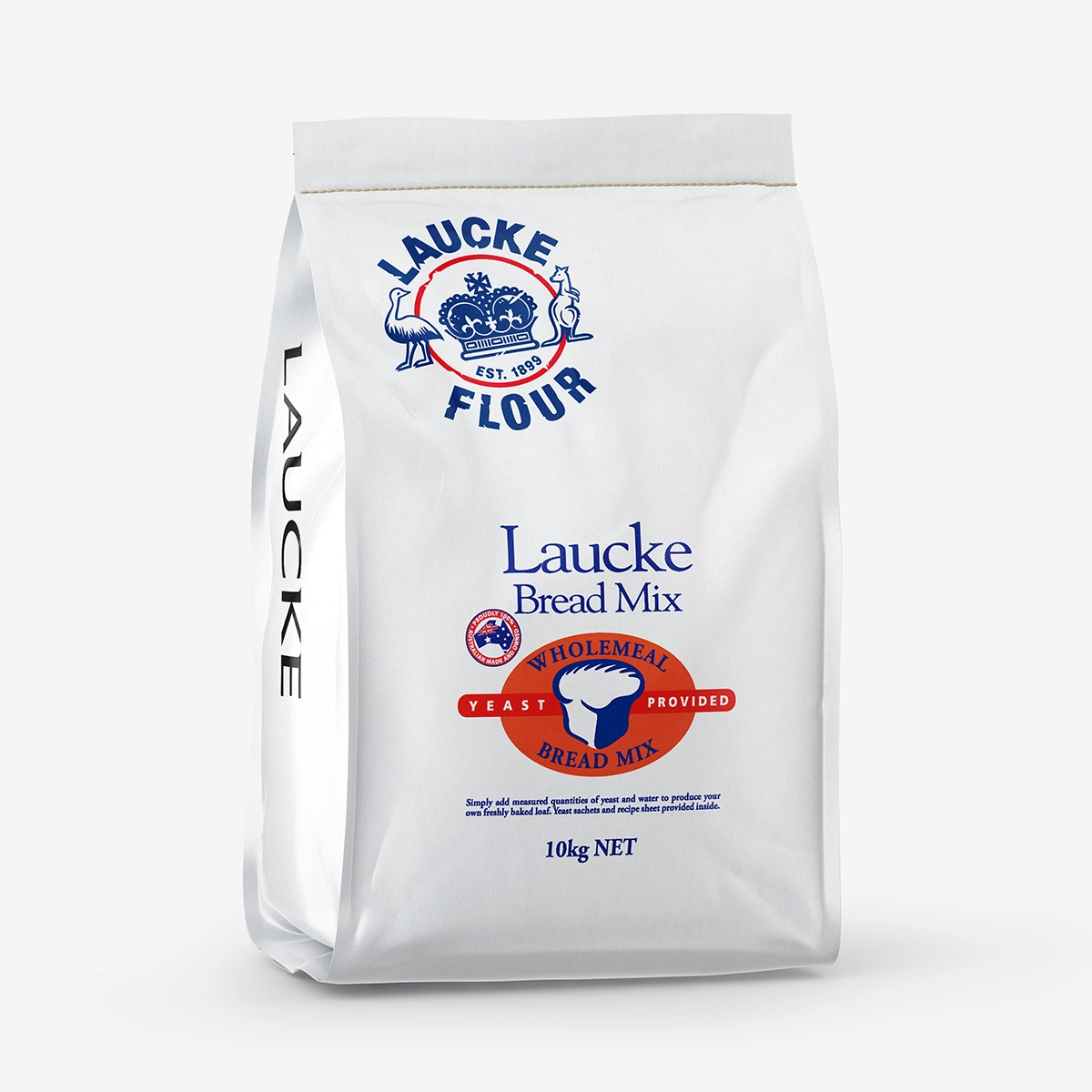
Wholemeal Bread Mix 10kg Bag

Wholemeal Bread Mix 10kg Bag

$28.83

A soft high fibre wholemeal the whole family can enjoy, packed with the benefits of wholegrains

Size:
Quantity:
ADD TO CART
  • Description

    A bold and tasty bread loaded with the benefits of whole grains. Wholemeal Bread mix will reliably produce a crusty, full flavoured loaf of excellent volume and appearance. It is produced from a true 100% wheaten Wholemeal, containing a high proportion of large bran flakes. Wholemeal is rich in the B group vitamins, Vitamin E, Minerals, Trace Elements, Complex Carbohydrates and essential Dietary Fibre. Wholemeal, with all the goodness of the grain, promotes the growth of beneficial bacteria in the colon, and is rich in Dietary Fibre.

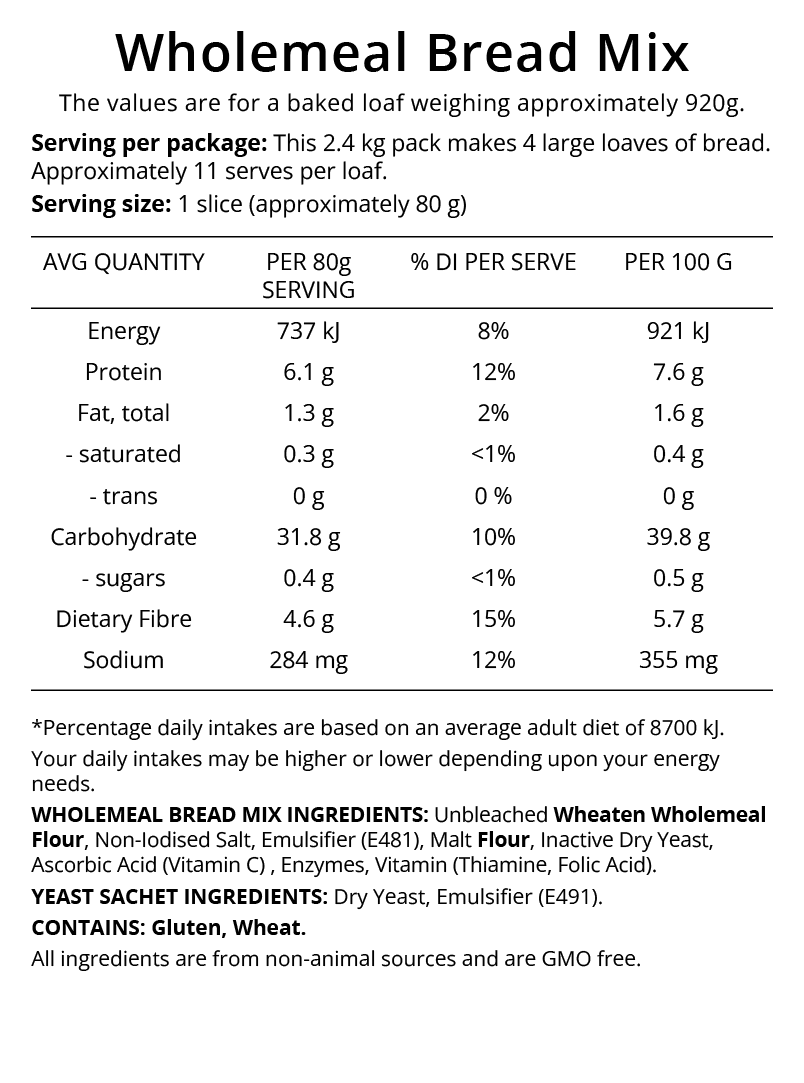
  • Nutrition
  • Baking Instructions/Attributes

    Bread dough can be prepared in your bread machine, in a dough mixer or by hand.

    For best results weigh ingredients

    Due to the wide range of different bread making machines now available, we have introduced a variable water rate recipe. 

    Start your recipe with the  ‘Water Target’ quantity and then, based on your results, either increase or decrease the water by up to 30 ml to obtain the best results in your machine.

    For example, the optimum water rate for a large loaf using 600 g of bread mix in a Panasonic is 430 ml, for a Breville BB350 it is 360 ml.  


    MAKING BREAD IN A BREAD MACHINE

    Water TargetWater VariationBread MixYeast
    Large Loaf420 ml+/- 30 ml600 g4.5 g (1.5 tsp)
    Medium Loaf420+/- 30 ml600 g3 g (1 tsp)


    Water Ratio: The optimum ratio of water to Wholemeal Bread Mix as used in a Bread Machine is 0.66 For example: 4 cups of Laucke Wholemeal Bread Mix weighing 640 g is multiplied by a ratio of 0.66 will require 400 ml of water plus or minus your machine variation.

    1. Add the ingredients into the bread bowl in order recommended by your bread machine instruction manual. 
    2. Select program. Longer mixing cycles generally produce better results. Press Start.

    BY DOUGH MIXER / HAND

    Water Bread MixYeast
    Large Loaf390 ml600 g6 g (2 tsp)


    1. Blend Laucke Bread Mix and yeast in a large bowl. Add lukewarm water and mix to form dough which is approximately 30 °C. 
    2. Knead the dough vigorously until it is smooth and elastic. Knead by hand for at least 10 minutes, or 6 minutes in a dough mixer.  More kneading provides better bread. Test by stretching a small amount of dough into a rectangle: it should form a thin, translucent ‘window’ in the centre. 
    3. To ferment (“proof”) the dough: return it to the bowl, ensuring there is room for it to rise, and cover to prevent skinning. Maintain in a warm environment until double in size (approx. 40 minutes).
    4. Knead lightly on a floured surface to ‘degas’ the dough. Shape as required and place in an oiled bread tin. Leave in a warm, draft free place to rise again, until at least double in size. 
    5. Bake in a preheated oven (conventional 220 °C / fan forced 200 °C) for 25-30 minutes or until golden brown. For a crispier crust, spray lightly with water before placing in oven. Loaf is baked if it sounds hollow when tapped.


  • Pack Specs

    Shipping Carton:

    • Weight: 10 kg
    • Width: 30 cm
    • Height: 51 cm
    • Depth: 10.3 cm
  • Returns

    If in consultation with our customer service team it is determined that a product is not fit for purpose or is damaged in a way that renders it unsafe or unsuitable for consumption then Laucke will work with that customer to ensure they get a replacement product. Any consumer using product purchased from any retail outlet is encouraged to retain their proof of purchase until the product is consumed. If a problem is likely to have occurred whilst the product was in the care of the retailer the product will need to be returned to that retailer for refund or replacement depending upon the policy of the store. Being a food item that is very attractive to a number of different insects it is not uncommon to find some insect activity in products that insects have had an opportunity to drop onto during any stage of the distribution. Refrigeration or freezing will halt insect activity but some evidnce of the activity by way of photograph or returned sample will be required to confirm infestation to allow the replacement process to be followed. The breeding cycle of most insects in ideal conditions is about 20 - 30 days so we can estimate the point of entry by assessing the numbers and amount of incidental matter such as webbing and larvae.